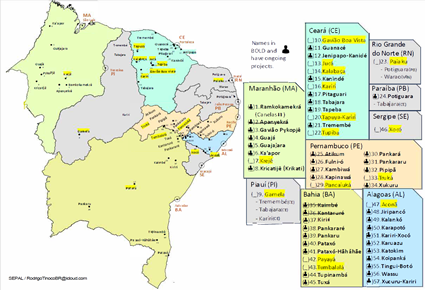
The Wassu people live in northeastern Brazil, in the state of Alagoas, in a region shaped by rolling hills, seasonal rivers, and long dry periods. Their identity is closely tied to ancestral land and shared memory, even as their original language has largely been replaced by Portuguese. What remains strong is a sense of peoplehood—stories passed down, places remembered, and bonds formed through generations of living together.
Over time, the Wassu experienced displacement and pressure from surrounding society, which disrupted traditional patterns of life. Yet they continue to hold fast to an identity shaped by family, land, and spiritual understanding. Contact with churches and schools has brought some new influences, but much of daily life still reflects older ways of seeing and trusting the world.
Wassu life is centered on family and endurance. Households depend on one another to meet daily needs through small?scale farming, occasional wage labor, and shared effort. Life in a demanding environment has taught them to value cooperation and resilience.
Meals are simple and often shared, reinforcing the importance of community over individual gain. Elders are respected for their wisdom and experience, especially when families face hardship or uncertainty. Children grow up learning responsibility early, shaped by both the land's limits and the strength of collective care.
Gatherings—whether for family milestones, traditional observances, or church activities—are important moments of connection. These times allow people to remember who they are, care for one another, and find meaning amid ongoing challenges.
For the Wassu, the spiritual world feels close and active. Traditional belief centers on trust in spiritual forces believed to influence health, protection, and the outcomes of daily life. Rituals and spiritual practices are used to seek balance, healing, and help when trouble arises. These beliefs are not simply cultural customs; they are expressions of real faith placed in unseen powers.
A small number among the Wassu have encountered the gospel and begun to hear about Jesus Christ. This Christian presence exists but remains limited, and for most, traditional animistic belief continues to shape how life is understood. Many still look to spirits for help with fear, sickness, and uncertainty, longing for security and peace.
The Wassu carry many burdens—physical, emotional, and spiritual. Limited access to healthcare, stable employment, and education affects daily life, especially for families with children. Historical marginalization continues to weigh heavily on the community.
Spiritually, the Wassu need the gentle, faithful presence of the gospel. Many place their trust in spiritual forces that promise help but cannot bring forgiveness, freedom from guilt, or reconciliation with God. They need to hear, in words and deeds, that true life and lasting peace are found in Jesus Christ alone. Those who have begun to follow Christ need patience, teaching, and discipleship so their faith can take root and grow strong.
Pray for peace and daily provision for Wassu families.
Ask God to draw Wassu hearts toward the hope found in Jesus Christ.
Pray for those living under fear of spiritual forces to find freedom in Christ.
Ask the Lord to strengthen the small seed of gospel witness among the Wassu.
Pray that loving, patient servants of Christ will walk alongside them in truth.
Scripture Prayers for the Wassu in Brazil.
https://en.wikipedia.org/wiki/Wassu-Cocal_Indigenous_Territory
https://en.wikipedia.org/wiki/Indigenous_peoples_in_Brazil
https://www.britannica.com/place/Alagoas
| Profile Source: Joshua Project |